
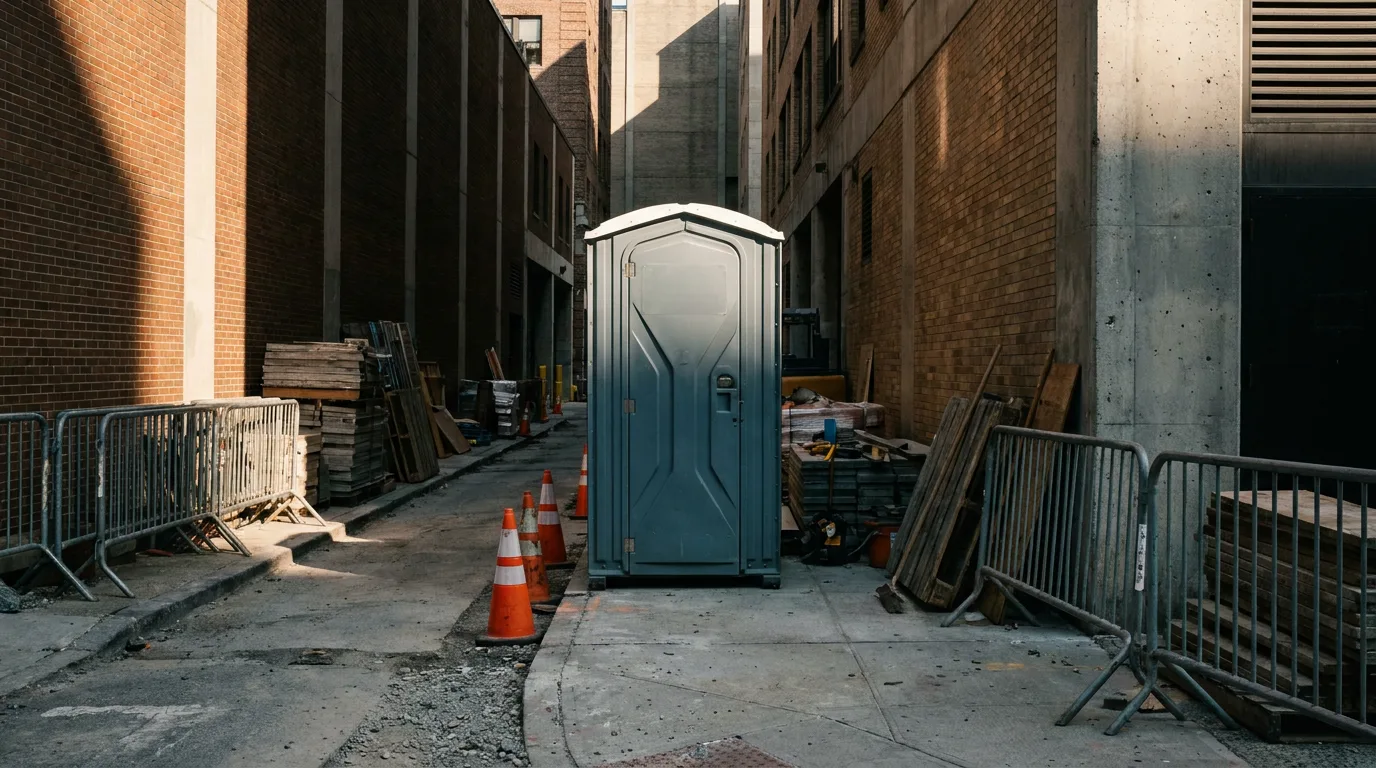
Do you need a permit for a porta potty in El Cajon?
If the unit sits fully on private property, on a driveway, lawn or job site pad, most homeowners and contractors will not need a permit. That covers most jobs we run for home renovation porta potty work and construction site services around El Cajon. The line moves once any part of the unit touches a public sidewalk, curb lane or street. That is NOT VERIFIED against a specific El Cajon ordinance in our records, so we tell every customer to confirm placement in the right of way with the city before we deliver. This is the same rule of thumb we give for dumpster permit requirements, since a permit for a dumpster on the street follows the same right-of-way logic as a permit for a porta potty on the street. Event organizers booking through event restroom rental or festival restroom rental run into this most, because crowd flow often pushes units toward the curb. We will help you check before your date is set. See our porta potty placement guide for the ground-level details on clearance and access once permitting is settled.
Where can a porta potty be placed on a property?
Placement rules protect access and stability more than they protect the neighbors. ADA Standards section 405.2 caps ramp slope at 1:12, so any accessible unit needs level, firm ground under it, and ADA Standards section 302.1 requires that ground be stable and slip resistant. A cluster of standard units triggers ADA Standards section 213.2, which requires at least 5 percent of clustered single-user units to be accessible, never fewer than one. That is why most job sites running several standard porta potty rental units alongside an ADA accessible porta potty unit are already covering that ratio. A standard unit runs about 44 by 48 inches on the ground and stands roughly 92 inches tall, so give it clearance on all sides for the service truck. Roll-off deliveries need about 60 feet of straight clearance behind the truck, which matters if you are also renting a roll-off dumpster rental unit for the same site in El Cajon. Keep units off slopes, away from storm drains, and clear of any temporary fence rental line so gates still swing.

What OSHA rules apply to porta potty rentals on job sites?
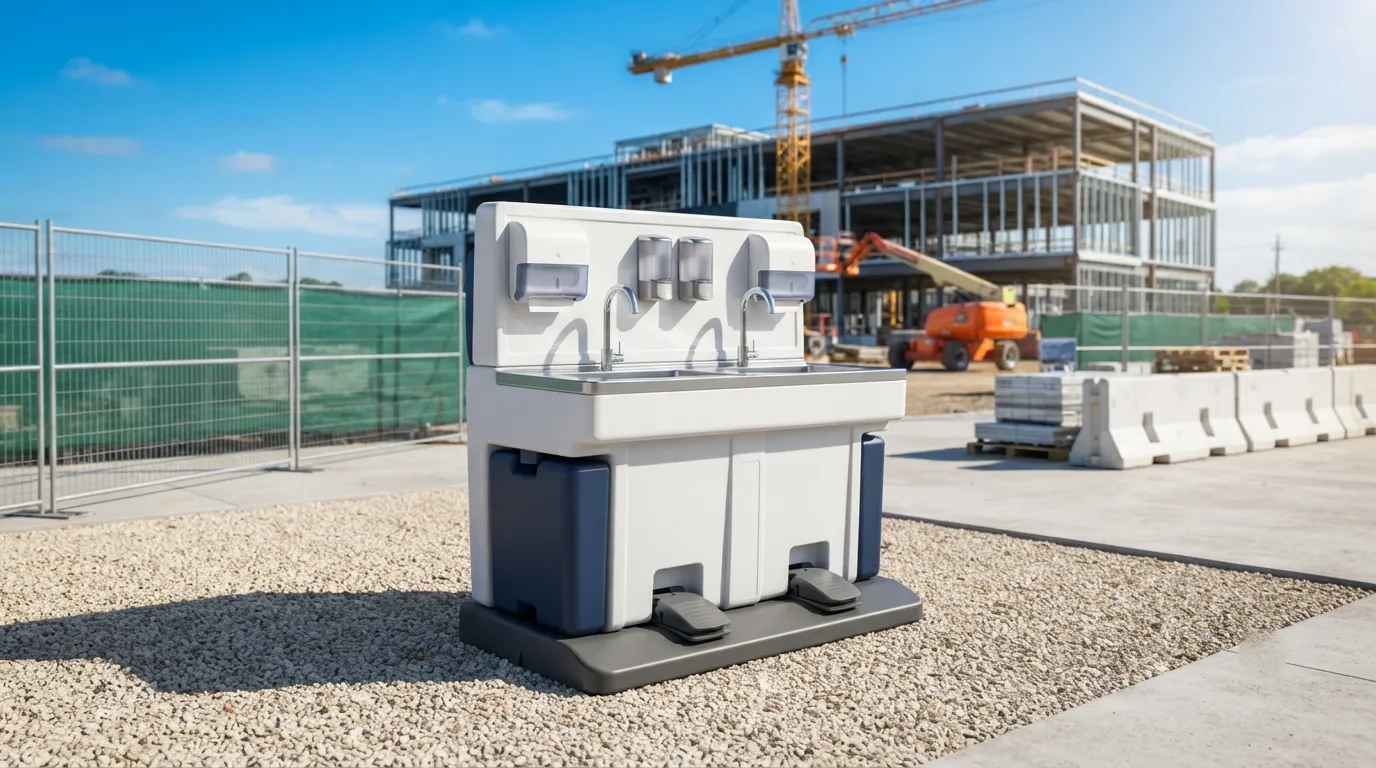
OSHA 1926.51(c)(1) sets the ratio: one toilet for 20 or fewer workers, then one toilet seat and one urinal per 40 workers up to 200, and per 50 workers above that. This is the number contractors ask about most when they call El Cajon Porta Pros for a bid, and it is covered in more depth on our OSHA portable toilet requirements page and our how many porta potties do I need calculator. OSHA 1926.51(a)(1) also requires an adequate supply of potable water at every place of employment, which is why crews often pair toilets with a handwashing station rental or a portable sink rental rather than relying on hand sanitizer alone, since 29 CFR 1910.141(d)(2) requires soap and towels or a hand drying device, not sanitizer, at any fixed washing facility. Crews spraying paint, coatings, herbicides or insecticides trigger OSHA 1926.51(f)(1) specifically, which calls for washing facilities beyond the general toilet count. None of this replaces a local placement check. It runs alongside it.
How do temporary power and dumpster permits fit in with porta potty placement?
Job sites rarely order one thing. A temporary power pole sitting near the street, a roll-off dumpster rental parked at the curb and a porta potty by the gate all fall under the same right-of-way question, and each one may need its own confirmation with the city. Contractors used to filing for a roll-off dumpster rental in Delaware or a Jersey City dumpster permit already know that street placement is treated differently from private-lot placement almost everywhere, and El Cajon works the same way; the specific fee and form are NOT VERIFIED in our records, so we point every customer to the city rather than guess. If your project needs a 10 yard dumpster rental or a 20 yard dumpster rental parked curbside, check dumpster weight limits and what cannot go in a dumpster while you are confirming placement, since violations there can cost more than the rental itself. We serve sites near Bostonia, about 3.0 miles northeast of El Cajon, and Granite Hills, about 4.1 miles east, and the same right-of-way question travels with the job.
FAQ
Does a residential backyard porta potty need a city permit?
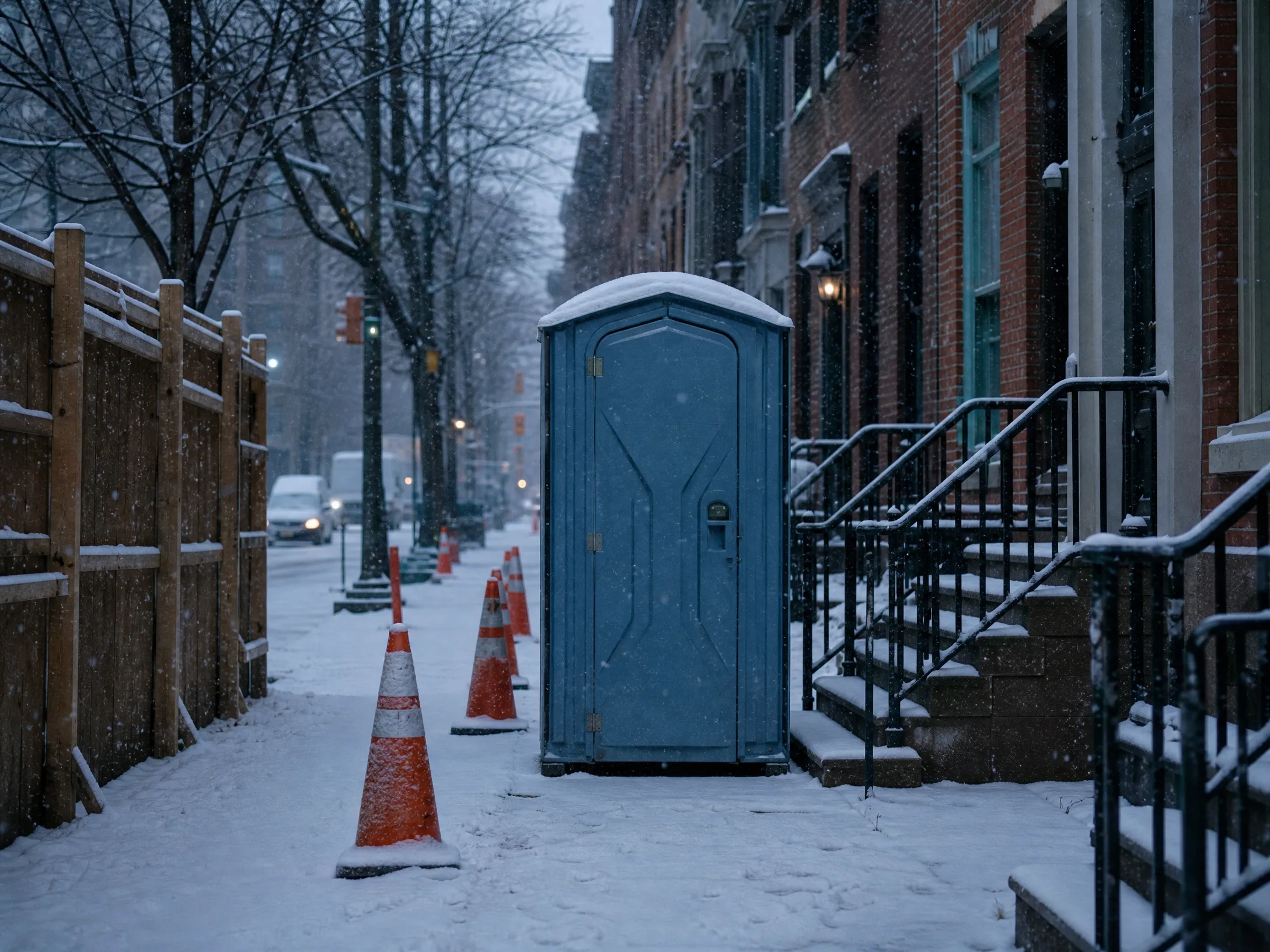
Usually not. A unit placed entirely on private property, like a backyard or driveway, typically skips the permit process. Once any part reaches the sidewalk or street, confirm with the city first. We flag this on every quote for jobs in El Cajon and nearby Casa de Oro-Mount Helix, 3.5 miles south.
Can I place a porta potty on the street in front of my house?
Only after checking with the city, since street and right-of-way placement is treated differently from private-lot placement almost everywhere. We have not verified a specific El Cajon fee or form, so ask before delivery rather than assume it is covered.
Do event rentals need a different permit than construction rentals?
Sometimes. Events often need crowd-flow and accessibility planning under ADA Standards section 213.2, while construction sites follow OSHA 1926.51(c)(1) toilet ratios. Both can also trigger right-of-way rules if units sit near a street. Check our event restroom rental page for planning details.
How far in advance should I confirm placement rules?
Call at least a week before delivery, sooner for street placement. Confirming with the city takes time, and swapping a curb spot for a driveway spot after the truck is loaded costs everyone time. See our porta potty rental checklist for the full timeline.
What happens if a unit is placed without checking first?
You risk a fine or a forced relocation mid-job, which costs more than the phone call would have. El Cajon Porta Pros always asks about placement before scheduling delivery, and we would rather move a unit six feet on paper than move it twice in the field.
Next step
Get a delivery date
Tell us the address, the dates and the headcount. We size the order and confirm the route.